
How long should you rest a steak?
About 5 to 10 minutes for a pan-seared or grilled steak. Resting mainly lets carryover cooking finish: rested and unrested steaks sliced at the same temperature lose about the same juice. Reverse-seared and sous vide steaks need little or no rest. If you cover it, tent the foil loosely so the crust stays crisp.
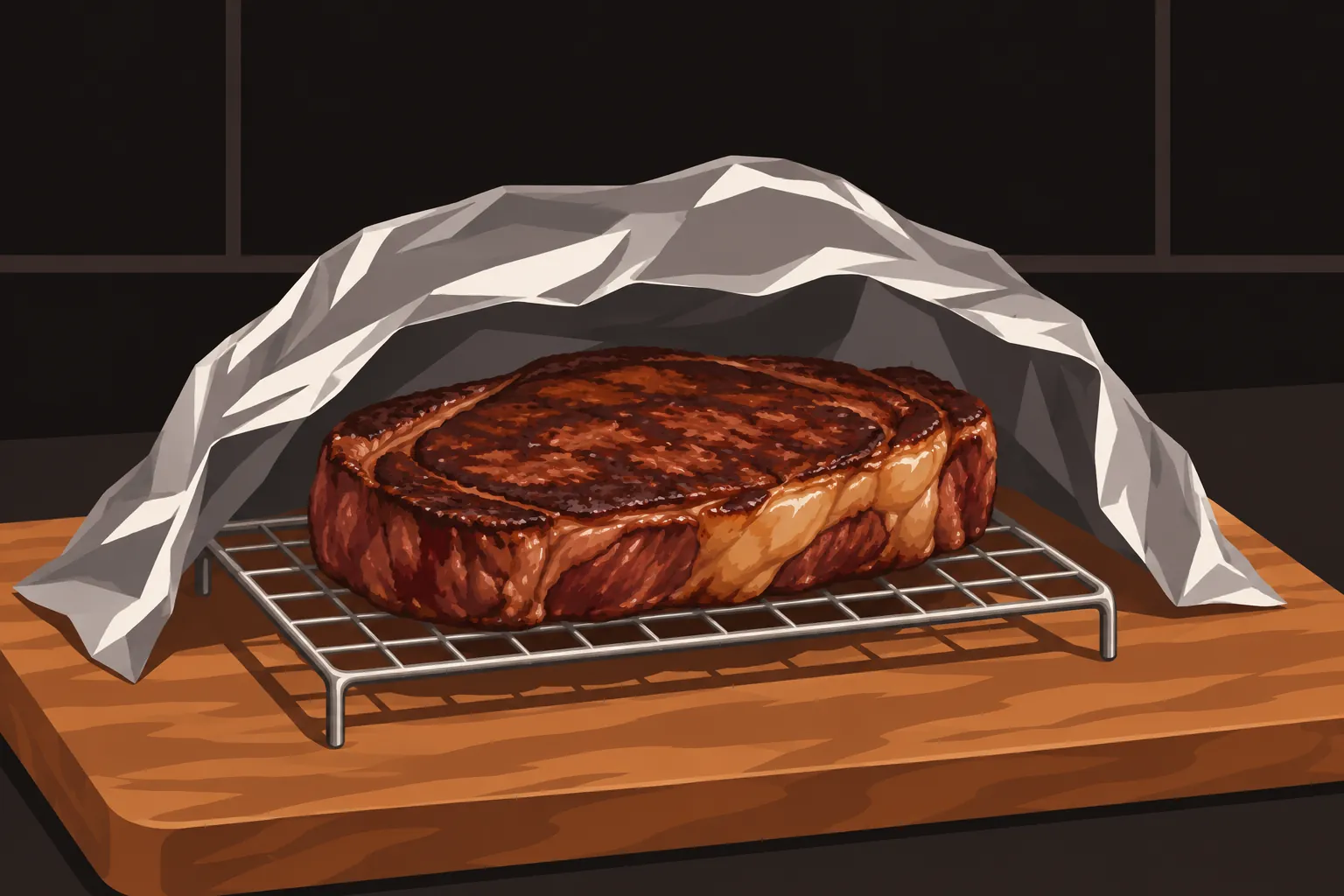
How long should a steak rest?
Common guidance is to rest a pan-seared or grilled steak 5 to 10 minutes before slicing.
What does resting a steak do?
It lets carryover cooking finish. After coming off high heat, a steak's center keeps rising about 3 to 5°F for thin steaks and 5 to 10°F or more for thick ones. That is why you pull it about 5°F below your target, or 5 to 10°F below for thick steaks cooked hot.
Does resting keep the juices in?
Not much. When rested and unrested steaks are sliced at the same internal temperature, they lose about the same amount of juice.
Do reverse-seared and sous vide steaks need to rest?
Barely. A reverse-seared steak rises much less after cooking than one seared hard from cold, because the low oven leaves only a shallow temperature gradient. As for a rest after the final sear, a sous vide steak needs little or none: the bath brings it to the same temperature from edge to edge.
Should you cover a resting steak with foil?
If you do, tent it loosely, never sealed. A loose foil tent keeps some heat in while letting steam escape; crimping or sealing the foil traps steam and softens the crust.
Common questions
Do you need to rest a steak?
A short rest lets a pan-seared or grilled steak finish cooking, but it does not keep much juice in: rested and unrested steaks sliced at the same temperature lose about the same amount.
Should you cover a steak while it rests?
You can, loosely. A loose foil tent keeps some heat in while letting steam escape; crimping or sealing the foil traps steam and softens the crust.
Does a reverse-seared steak need to rest?
Very little. It rises much less after cooking than a steak seared hard from cold, because the low oven leaves only a shallow temperature gradient.
Sources
Every fact on this page is checked against at least two independent sources. How we check facts.
Show all 26 sources
- AmazingRibs (Meathead Goldwyn), Resting Meat: Why I Don't Believe The Hype
- America's Test Kitchen, Resting Meat Is Worth It, and We've Got the Data to Prove It
- America's Test Kitchen, Doneness Temperatures for Beef and Lamb
- America's Test Kitchen, All About Carryover Cooking
- America's Test Kitchen, 8 Simple Tricks for Perfect Grilled Steaks
- America's Test Kitchen, Resting Meat
- America's Test Kitchen, How Do I Know When a Steak Is Done?
- America's Test Kitchen / Cook's Illustrated, The Science: Why Sous Vide Is Perfect for Cooking Meat
- America's Test Kitchen / Cook's Illustrated, Sous Vide Seared Steaks
- Beef Checkoff (Cattlemen's Beef Board and NCBA), Confident Cooking with Beef: Grilling Guidelines (PDF)
- Beef Checkoff (Cattlemen's Beef Board and NCBA), 3 Simple Steps for Skillet-to-Oven Cooking Beef (infographic, 2013)
- Beef. It's What's For Dinner (beef checkoff), Grilling time guidelines
- Cook's Country (America's Test Kitchen), Resting Meat
- Serious Eats (Daniel Gritzer), Meat resting science (July 22, 2025)
- Serious Eats (J. Kenji López-Alt), Pan-Seared, Butter-Basted Thick-Cut Steak
- Serious Eats (J. Kenji López-Alt), Reverse-Seared Steak
- Serious Eats (J. Kenji López-Alt), Sous Vide Steak Guide | The Food Lab
- Serious Eats (Laila Ibrahim), Why So Many Meat Cooking Rules Are Wrong
- ThermoWorks, Steak Temperature: Getting It Right
- ThermoWorks, Steak Temperature Guide: How to Nail Perfect Doneness Every Time
- ThermoWorks, Filet Mignon Cooking Guide
- ThermoWorks, Grilling Perfect Steaks Every Time, Every Steak
- ThermoWorks, Grilled Rib Eye Steak: Reverse Sear and Thermal Principles
- ThermoWorks, Steak Temperature: Getting It Right
- ThermoWorks, Resting: The Final Phase of Cooking
- ThermoWorks (Martin Earl), Carryover Cooking: the Hot Science Behind Your Food's Finish