
How to cook a steak
Pick the method by thickness. Pan-sear or grill steaks up to about 1½ inches thick over high heat. For thicker steaks, reverse sear in a low oven or cook sous vide, then sear, for even pink from edge to edge. Whatever the method, cook to temperature with a thermometer, not the clock.
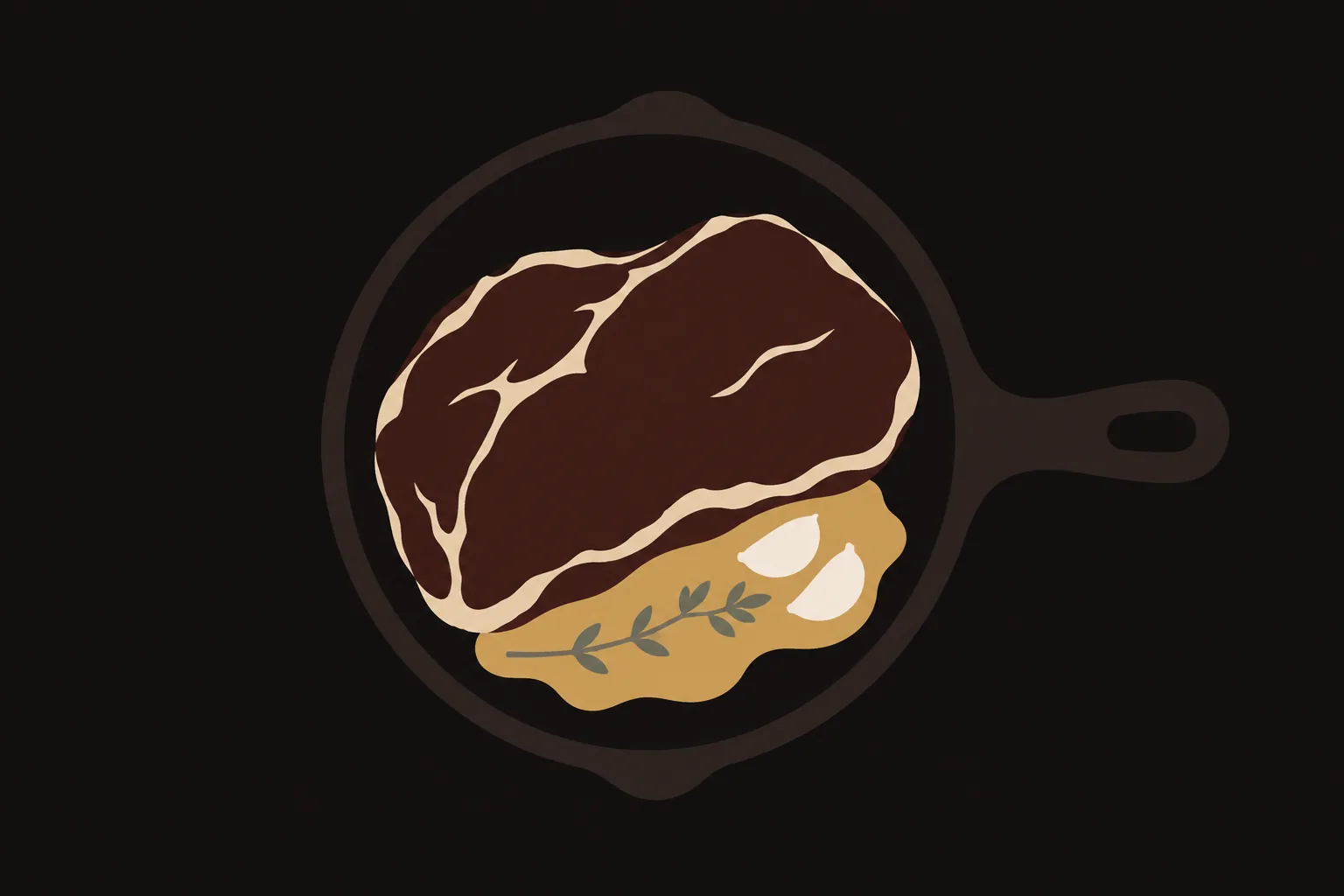 How to pan-sear a steakBest for steaks up to about 1½″. Fast, with a butter-basted crust.
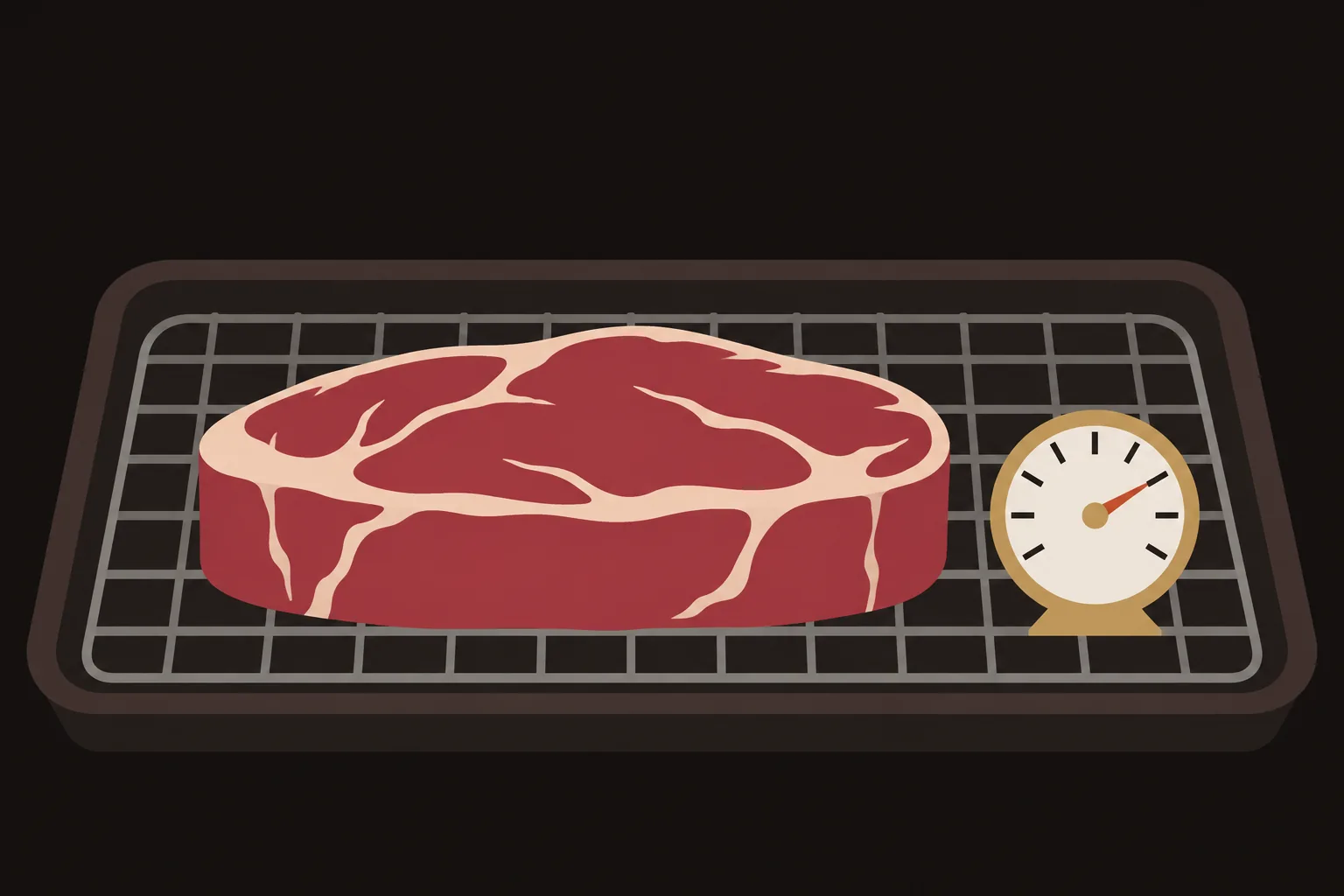 How to reverse sear a steakBest for thick steaks, 1½″ and up. Even pink edge to edge.
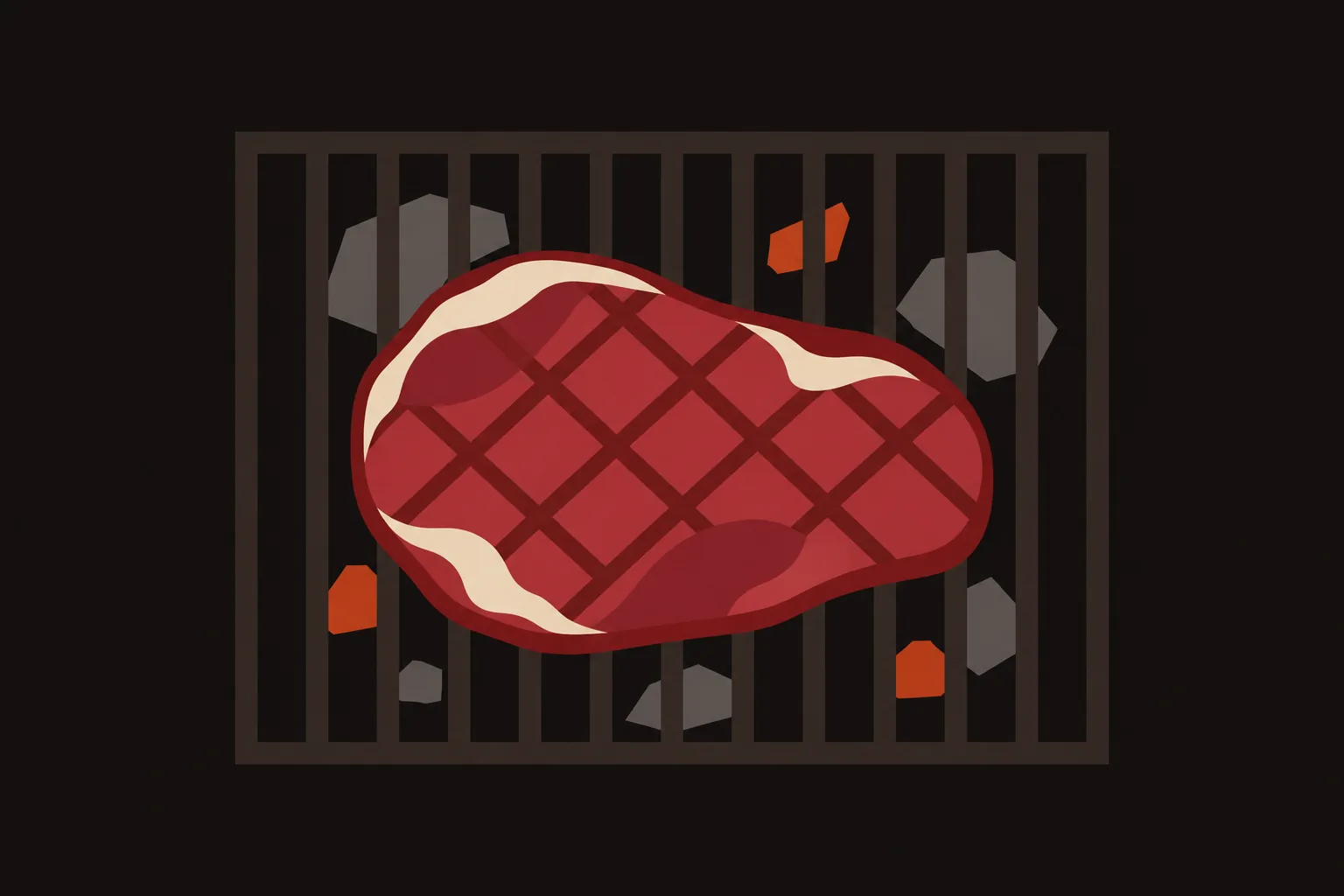 How to grill a steakSmoky char over live fire. A cooler zone keeps you in control.
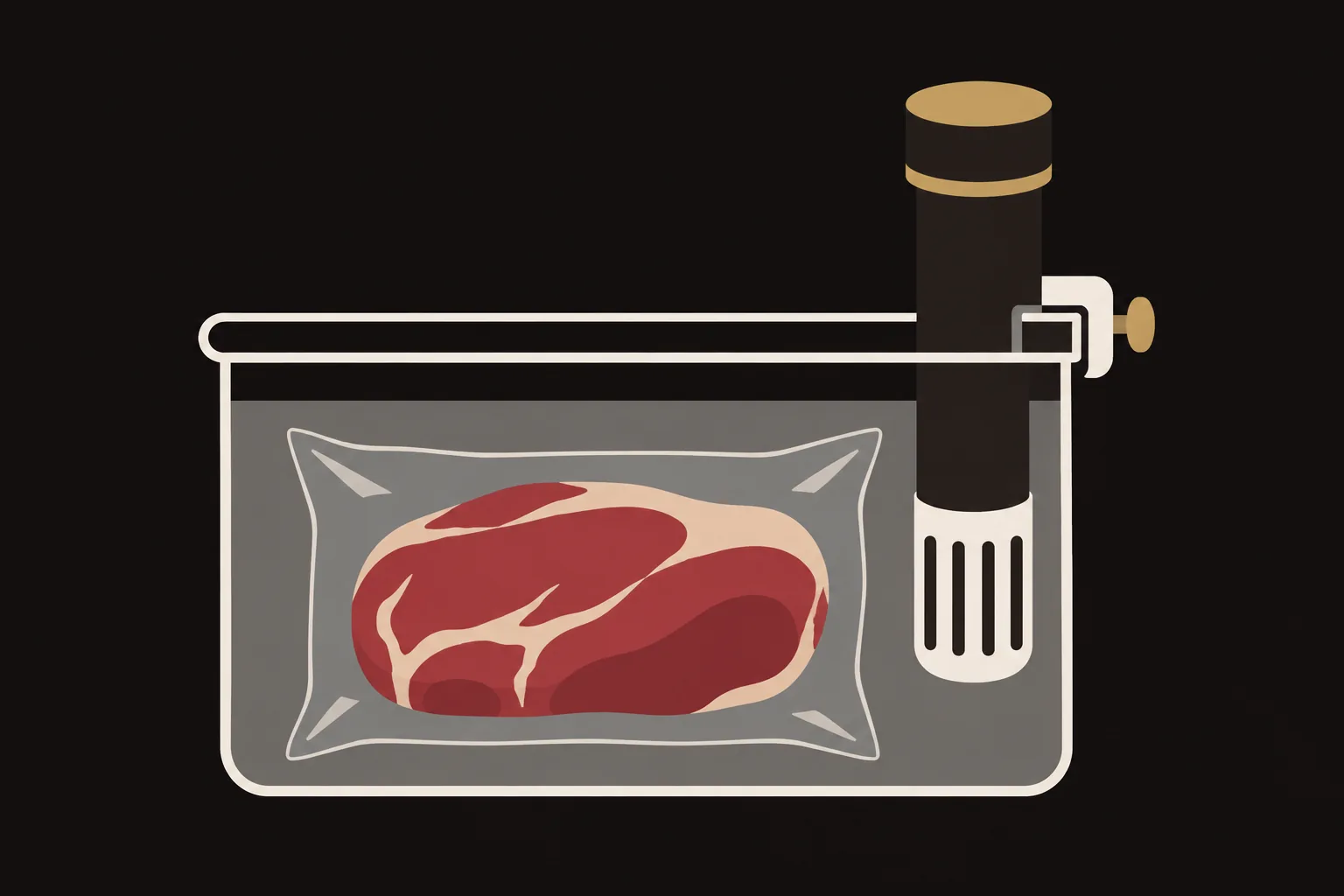 How to cook a steak sous videHands-off and exact. Set the doneness, then sear for crust.
How do the four methods compare?
| Method | Best for | Time | Grey band | Rest |
|---|---|---|---|---|
| Pan-sear | Steaks about ¾″ to 1½″ thick | About 8 to 14 min for a 1½″ steak | Thin, if you flip often | 5 to 10 min |
| Reverse sear | Steaks about 1½″ thick and up | Roughly 20 to 30 min in the oven at 1½″, plus the sear | Very thin | Little or none |
| Grill (two-zone) | Steaks about ¾″ to 2″ thick | Roughly 3 min per side at 1″; 10 to 17 min two-zone at 1½″ | Thin with two zones, wider over one hot fire | 5 to 10 min |
| Sous vide | Any thickness, especially thick steaks and cooking for a crowd | About 1¼ to 3½ hr in the bath, by thickness | Almost none | None needed |
The grey band is the layer of overcooked meat under the crust. Times are for a fridge-cold steak and vary with your stove, grill and steak.
Which method is best for a thin steak?
For steaks up to about 1½ inches, use high, direct heat: a pan-sear or the grill. The crust and the center finish at about the same time. A 1½-inch steak in a hot pan takes about 8 to 14 minutes to reach a medium-rare pull. Flipping every 30 to 60 seconds cooks it roughly a quarter to a third faster than flipping once.
Which method is best for a thick steak?
On a thick steak, high heat alone overcooks the outer layer before the center is done. That layer is the grey band. A reverse sear cooks the steak gently at 200 to 275°F (93 to 135°C) first, then sears it, and sous vide holds the whole steak at the final temperature before a fast sear. Both leave only a thin band.
Which method is the most hands-off?
Sous vide. You set the bath to the final temperature you want and the steak cannot overshoot it. It is also the slowest: a fridge-cold steak takes about 1¼ hours at 1 inch, 2½ hours at 1½ inches and 3½ hours at 2 inches to heat through. A reverse sear is the next most forgiving, because a reverse-seared steak rises much less after cooking than one seared hard from cold.
What do all four methods have in common?
- Salt the steak at least 40 to 45 minutes ahead, or up to overnight.
- Pat the surface dry before it meets the heat, so it browns instead of steaming.
- Cook to temperature. Check the doneness chart for your target, and pull a pan-seared or grilled steak about 5°F below your target, or 5 to 10°F below for thick steaks cooked hot. A reverse-seared steak leaves the oven 15 to 30°F below your target.
- Not sure which to pick? Try your exact steak in the cook planner, which shows the pull temperature and every step for each method.
Common questions
What is the best way to cook a steak?
It depends on thickness. Pan-sear or grill steaks up to about 1½ inches thick. For thicker steaks, a reverse sear or sous vide gives an even pink center with a thin grey band, then a quick sear adds the crust.
What is the easiest way to cook a steak?
Sous vide is the most forgiving, because the water bath is set to the final temperature you want and the center cannot get hotter than the water. A pan-sear is the fastest and needs only a skillet and a thermometer.
Do I need a thermometer to cook steak?
Yes, for any method except sous vide. Stoves, grills and steaks vary too much for times alone, so check the center with an instant-read thermometer and pull the steak a few degrees before your target.
Sources
Every fact on this page is checked against at least two independent sources. How we check facts.
Show all 44 sources
- AmazingRibs (Meathead Goldwyn), Resting Meat: Why I Don't Believe The Hype
- America's Test Kitchen, Pan-Seared Strip Steaks
- America's Test Kitchen, Sear Any Steak to Perfection on the Stovetop
- America's Test Kitchen, Charcoal-Grilled Porterhouse or T-Bone Steaks
- America's Test Kitchen, Charcoal-Grilled Strip or Rib Steaks
- America's Test Kitchen, Grilled Thick Steaks
- America's Test Kitchen, Reverse-Seared Strip Steaks with Cowboy Butter
- America's Test Kitchen, Sous Vide Seared Steaks
- America's Test Kitchen, The Problem with Thick-Cut Steaks
- America's Test Kitchen, Pan-Seared Thick-Cut Strip Steaks
- America's Test Kitchen, The Effect of Flipping on a Crisp Burger and Steak Crust
- America's Test Kitchen, How to Grill Steak Without a Recipe
- America's Test Kitchen, How to Season Steak for the Best Flavor
- America's Test Kitchen, The Easiest Way to Make Steak Taste Even Better: Salt Twice
- America's Test Kitchen, 8 Simple Tricks for Perfect Grilled Steaks
- America's Test Kitchen, All About Carryover Cooking
- America's Test Kitchen, Roasted Thick-Cut Rib-Eye Steaks
- America's Test Kitchen, Thick-Cut Porterhouse Steaks
- America's Test Kitchen, How to Cook a Juicy Steak - Bake + Sear
- America's Test Kitchen, Resting Meat Is Worth It, and We've Got the Data to Prove It
- America's Test Kitchen / Cook's Illustrated, Should Steak Be Room Temperature Before Searing?
- America's Test Kitchen / Cook's Illustrated, Butter-Basted Rib-Eye Steak
- Beef Checkoff (Cattlemen's Beef Board and NCBA), Confident Cooking with Beef: Grilling Guidelines (PDF)
- Beef. It's What's For Dinner (beef checkoff), Grilling time guidelines
- Cook's Country (America's Test Kitchen), Resting Meat
- Douglas Baldwin, A Practical Guide to Sous Vide Cooking (Table 2.2)
- Physics Today (American Institute of Physics), The Virtual Cook: Modeling Heat Transfer in the Kitchen (McGee et al., 1999)
- Serious Eats, The Food Lab's Perfect Grilled Ribeye Steaks
- Serious Eats, Reverse-Seared Steak
- Serious Eats, Steak flipping cooking technique (July 15, 2026)
- Serious Eats (Daniel Gritzer), Meat resting science
- Serious Eats (J. Kenji Lopez-Alt, The Food Lab), via secondary report, The Food Lab: salting steak (2011)
- Serious Eats (J. Kenji López-Alt), Pan-Seared, Butter-Basted Thick-Cut Steak
- Serious Eats (J. Kenji López-Alt), The Food Lab's Complete Guide to Sous Vide Steak
- Serious Eats (J. Kenji López-Alt), The Food Lab: Flip Your Steaks (and Burgers) Multiple Times
- Serious Eats (J. Kenji López-Alt), Perfect Pan-Seared Steaks (The Food Lab: More Tips for Perfect Steaks)
- Serious Eats (Laila Ibrahim), Why So Many Meat Cooking Rules Are Wrong
- ThermoWorks, Grilling New York Strip Steak: Key Temperatures
- ThermoWorks, Grilled Strip Steaks, Perfectly Done
- ThermoWorks, Carryover Cooking: the Hot Science Behind Your Food's Finish
- ThermoWorks, Grilled Rib Eye Steak: Reverse Sear and Thermal Principles
- ThermoWorks, Steak Temperature: Getting It Right
- ThermoWorks, Steak Temperature Guide
- ThermoWorks, Grilling Perfect Steaks Every Time, Every Steak